Dashcams have become an essential accessory for drivers in Malaysia. Like any electronic device, they come with their own set of technical challenges. Corrupted video files, recording failures, and SD card errors are among the most common complaints.

Many factors contribute to SD card issues in dashcams, from Malaysia's humid tropical climate to the constant vibration from its roads. This guide covers everything you need to know about choosing the right SD card so you never lose critical footage when it matters most.
Best Dashcam Features for Malaysian Roads
Why Dashcams Need a Special SD Card
A dashcam operates very differently from your smartphone or everyday camera. It records continuously while you drive, writing new footage in a loop that constantly overwrites older files which means the card is being read and written to in real time, without interruption.
This places the SD card under far greater stress than typical consumer use. Even branded, high-quality standard SD cards tend to fail prematurely under these conditions. That's why dashcams require high-endurance SD cards specifically engineered for continuous-recording security applications.
5 Best SD Cards for Dashcams
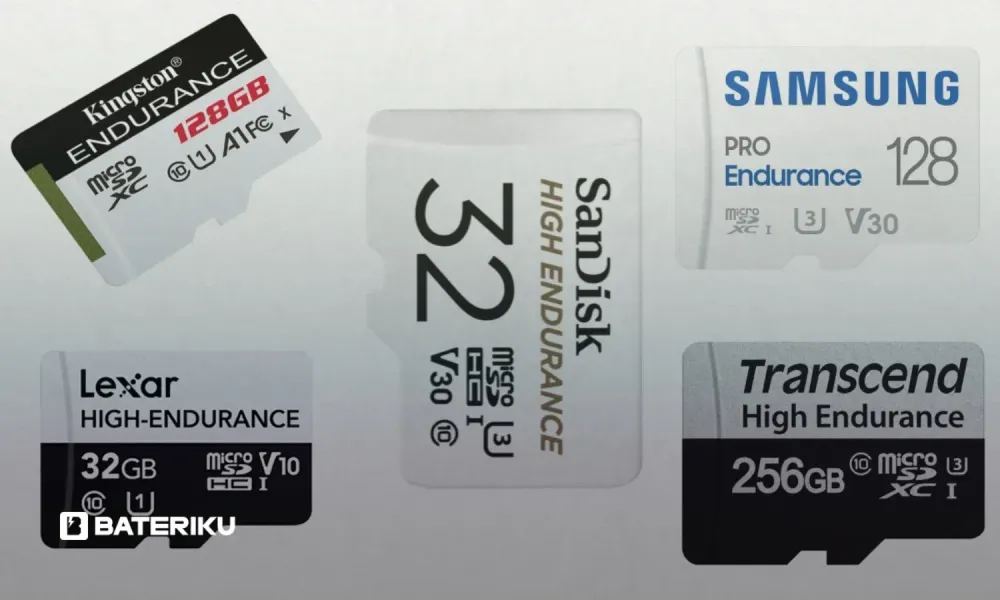
1. Kingston High Endurance
- 20,000+ hours of continuous recording
- U1 variant with read speeds up to ~95MB/s
- Built for the rigors of daily driving
A budget-friendly, reliable choice for everyday FHD dashcam use.
2. Lexar High-Endurance
- 12,000+ hours of continuous recording
- Available in U1 and U3 variants
- Durable enough for light to moderate use
A solid entry-level option for basic dashcam setups.
3. Samsung PRO Endurance
- 43,800+ hours of continuous Full HD recording
- U3 / V30 rated with read speeds up to 100MB/s & write speeds up to 30MB/s
- Operating temperature range: −25°C to 85°C
The go-to card for high-resolution dashcams that demand long-term reliability.
4. SanDisk High Endurance
- 40,000+ hours of continuous Full HD recording
- U3 / V30 rated with read speeds up to 100MB/s & write speeds up to 40MB/s
- Resistant to heat, water, shock, and X-ray exposure
A well-rounded performer at a reasonable price point.
5. Transcend High Endurance
- 240,000+ hours of continuous recording
- U3 / V30 rated with top-tier read/write speeds
- Exceptionally rugged construction
The best long-term investment for drivers who want a set-and-forget solution.
What to Look for in a Dashcam SD Card
Leading storage manufacturers like Samsung, SanDisk, Kingston, Lexar, and Transcend, they all offer high-endurance SD card lines tailored for dashcam use, and they share a consistent set of core features.
Endurance for loop recording is the most critical requirement. These cards are engineered to handle the relentless cycle of continuous recording and overwriting. The best options on the market can sustain up to 240,000 hours of video before any meaningful risk of failure.
Write speed is equally important, as the card must keep pace with the dashcam's sensor output without dropping frames. Dashcam SD cards typically offer read speeds up to 100MB/s and write speeds up to 40MB/s which the latter being especially crucial for 4K-capable dashcams.
Heat resistance is non-negotiable in Malaysia's climate. Cards rated for up to 70°C or higher are essential, particularly if your vehicle is regularly parked outdoors in Kuala Lumpur's midday sun.
Beyond heat, quality dashcam cards are also built to withstand shock and vibration which are important for anyone navigating rougher road surfaces and some go further with waterproofing and X-ray resistance for added peace of mind.
Finally, look for cards with power-loss protection. This feature ensures that footage isn't corrupted or lost if your vehicle shuts off unexpectedly, which is more common than you'd think.
Choosing the Right Storage Capacity
SD card speed classes are labeled using standardized ratings, and matching the right class to your dashcam's resolution is essential for reliable performance.
- Full HD (1080p) dashcams require at least a Class 10 / U1 card, capable of sustained write speeds of 10MB/s.
- 2K and above dashcams need a U3 / V30 card, rated for 30MB/s or faster.
When it comes to capacity, your dashcam's configuration plays the biggest role. A single front-facing 1080p camera consumes roughly 8GB per hour of footage, while adding a rear camera doubles that to around 16GB per hour.
As a general rule: 64GB works well for single-camera setups, 128GB is recommended for dual-camera configurations, and 256GB is worth considering if your dashcam includes a parking or sentry mode that records while the vehicle is stationary.