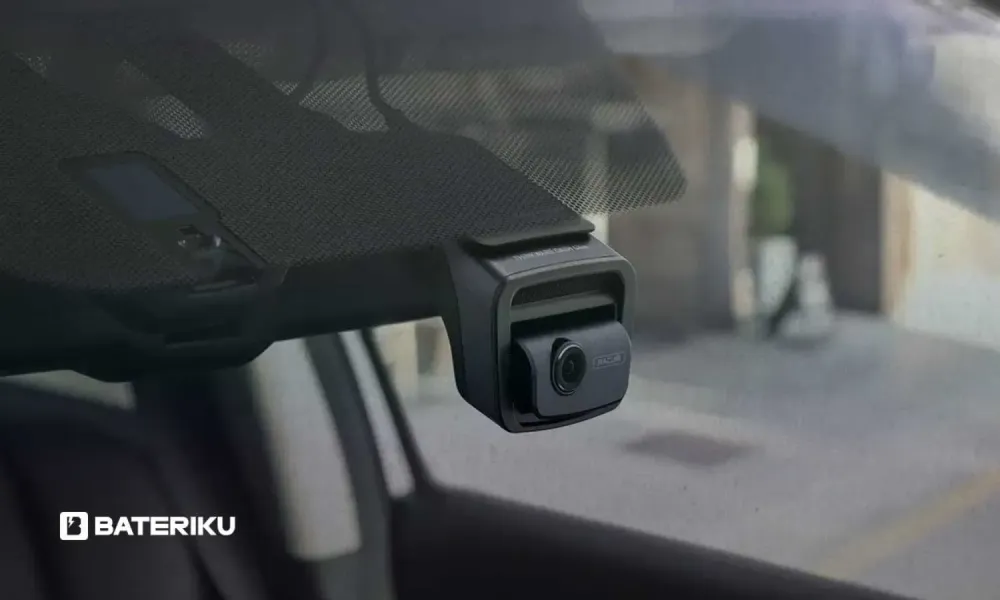
A dashcam is fast becoming an essential piece of kit for every vehicle on Malaysian roads. It is much needed accesories when you are dealing with an accident claim or providing evidence to authorities as it provides clear footage of an incident that can make all the difference.
The good news is that dashcams have become significantly more affordable in Malaysia. The bad news is that the same price drop has flooded the market with products chasing gimmicks. misleading resolution claims, specs that don't hold up in real-world use, and build quality that crumbles under our climate are some examples of it.
By the end of this article, you'll know exactly what to look for.

Specifications That Actually Matter On A Dashcam
Shopping for a dashcam can quickly become overwhelming. Too many options, too many spec sheets, and before long you're just buying whatever ad the algorithm keeps showing you. To cut through the noise, here are the core specifications worth understanding before you spend a single ringgit:
- Camera resolution
- Day and night video quality
- G-sensor for emergency clip saving
- GPS for telemetry recording
- Heat resistance
- 4G connectivity
Camera Resolution
Sharp, clear footage is the difference between evidence that holds up and footage that's useless in a dispute. In 2026, 1080p (Full HD) is no longer good enough as it risks missing critical details like licence plate numbers. For Malaysian drivers, aim for at least 2K (1440p), or ideally 4K. Modern imaging sensors like the Sony IMX335 are fully capable of recording at these resolutions without running into serious overheating risks.
Source: BenQ
Night Video Quality
A dashcam that performs well in daylight but falls apart at night is only doing half its job. Malaysian roads can be dimly lit or completely unlit. It puts real pressure on a camera's low-light performance. Lower-quality sensors often produce blurry footage at night because they need a slower shutter speed to compensate for the darkness. With that, it introduces motion blur in the process. Poorly designed lenses add another problem: unsightly starburst effects around headlights. Technologies like Sony STARVIS and STARVIS 2 were built specifically to address these challenges, and are worth looking out for.
Source: Sony
G-Sensor for Emergency Clip Saving
Dashcams record in a continuous loop, constantly overwriting older footage with new recordings. To make sure critical moments aren't lost, most dashcams include a G-sensor which is an accelerometer that detects sudden changes in force, such as hard braking or an impact. When triggered, it automatically locks and saves the clip from that moment, keeping it safe from being overwritten. It's a small but important feature that could save the exact footage you need.
Source: TimetofixThis!
GPS and Telemetry Recording
More premium dashcams also include GPS, allowing them to log location data alongside your footage. This means the recording can capture timestamps, speed, and coordinates. Those are information that can significantly strengthen your case in a dispute by showing whether you were within the speed limit, how quickly you accelerated, or how hard you braked before an incident.
Surviving Malaysian Heat
The interior of a parked car under the Malaysian sun can reach temperatures of 60°C or higher. Budget electronics simply weren't built for those conditions, and cheap plastic housings fare even worse. This becomes a serious concern with dashcams that include built-in batteries for parking mode recording. For you information, certain battery types are genuinely dangerous when exposed to extreme heat, and can swell or even rupture.
Source: MGTC
Lithium Battery vs. Supercapacitor
For Malaysian conditions, a dashcam with a supercapacitor is the safer and more durable choice. Unlike lithium batteries, supercapacitors contain no pressurised electrolyte, which means there's no risk of swelling or explosion in the heat. They also handle far more charge and discharge cycles than lithium, so degradation over time is much less of a concern.
The trade-off is cost and capacity. Supercapacitors are more expensive to manufacture, and they store less energy than lithium batteries. That means parking mode recording will run for a shorter duration. That said, for most drivers, the peace of mind and longevity are well worth it.
4G Connectivity
A 4G-enabled dashcam can upload footage directly to the cloud without needing a Wi-Fi connection, letting you access recordings remotely from your phone. It can also send you real-time alerts if an incident occurs while your car is parked — for example, if the G-sensor detects a knock or collision. When wired directly to the car battery, a 4G dashcam can run in a permanent "sentry mode," keeping watch indefinitely.
One thing to keep in mind: 4G connectivity isn't provided by the manufacturer. You'll need to subscribe to a mobile data plan separately, which adds an ongoing monthly cost to factor into your budget.
Single Camera vs. Multi-Camera
The majority of dashcams on the market come as single-camera units, and for basic everyday use, one camera is perfectly adequate. That said, multi-camera systems have been growing in popularity as the technology has become more accessible and for good reason. Having multiple lenses means more of your surroundings are captured from more angles, giving you a more complete picture of any incident.
Source: Momentocam
Front + Rear
The most popular multi-camera configuration pairs a front-facing camera with a rear-facing one. Rear coverage is particularly valuable when it comes to tail-end collisions, where footage from behind can make or break an insurance claim or dispute. The main downside is installation — the rear camera is typically connected to the main unit via a long cable that needs to be routed through the car's interior, which can be a fiddly process to get looking clean.
Front + Rear + Cabin
Three-camera systems are also available, with the third unit pointed inward at the cabin. This setup is most commonly used by e-hailing drivers and commercial lorry operators transporting sensitive cargo. The combination of three angles gives a much clearer account of how the driver responded to an incident, and makes it considerably easier for employers or enforcement agencies to carry out a proper investigation when needed.
Dashcam Marketing Gimmicks to Watch Out For
Not every dashcam that claims to shoot 4K actually does. A common trick used by budget manufacturers is to take a 1080p sensor feed and digitally upscale it to 4K, the same principle as watering down your Teh Tarik to make it look like more. The quantity goes up, but the quality goes nowhere.
Another gimmick to be sceptical of is an exaggeratedly wide field of view. A wide FOV sounds appealing in theory, but if the lens isn't properly engineered to support it, you end up with barrel distortion, where the edges of the frame bow and warp, ironically causing the camera to miss or misrepresent the very details it's supposed to capture.
Your Dashcam Is Only as Reliable as Your Battery
Of course, keeping your car properly equipped doesn't stop at the dashcam. A reliable battery is just as important especially if you're running a dashcam in parking mode or sentry mode around the clock, where the constant draw on your electrical system adds up fast.
Get Astra Batteries for All Vehicle Types
At Bateriku, we offer on-demand Astra car battery installation anywhere in Malaysia. Our comprehensive database identifies your car model and recommends the correct battery for you.
Astra batteries come with nationwide warranty coverage, allowing claims at any Bateriku branch. Each purchase also includes FREE Personal Accident Takaful coverage up to RM7,000, the first in the industry to provide such protection. Benefits include:
- Death: RM7,000
- Total Permanent Disability (TPD): RM7,000
- Burial Expenses: RM2,000
- Ambulance: RM500
Coverage lasts 12 months.
Beyond on-demand battery delivery, we also offer additional services to ease car ownership concerns. Our roadside assistance can help jump-start your car, refuel if stranded, unlock your vehicle, repair or replace tires, or tow your car to a workshop if needed.
See the full list of services at Bateriku.