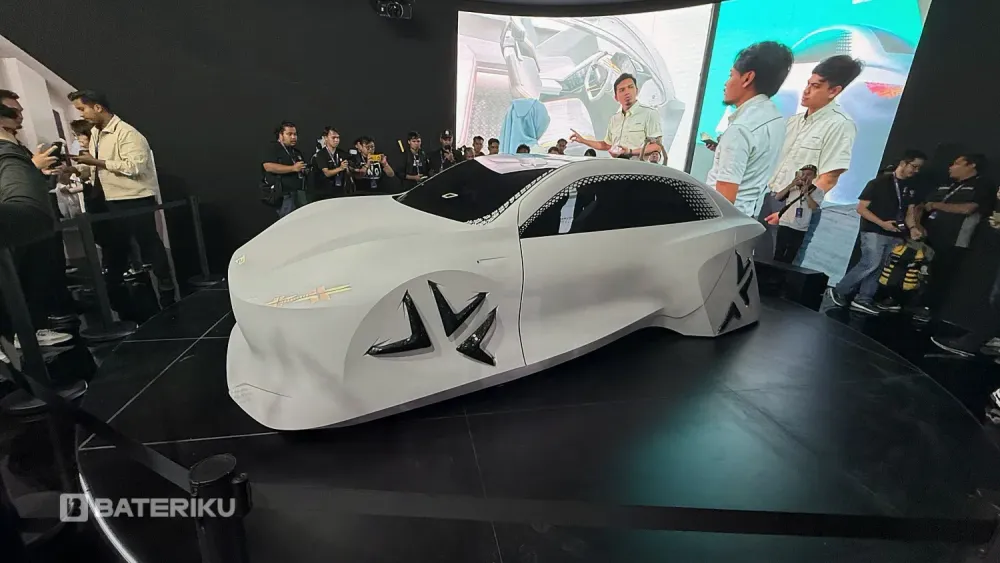
At KLIMS 2026, Perodua showcased the next phase of its EV journey with the C2 concept, which continues from the EM-O concept introduced back in 2023. So far, Perodua has not shared any detailed technical specifications. Instead, the focus at the event is mainly on the idea and direction behind C2.
Perodua C2 concept
According to Perodua, the C2 is meant to be part of a wider mobility ecosystem powered by its P-Circle app. The vehicle is designed to connect with digital services such as charging stations, traffic updates, e-wallet functions, after-sales support, and more.

On the technology side, C2 is said to feature AI-assisted driving functions like AI-based navigation, automated parking, and enhanced vehicle security. However, these remain conceptual with no confirmed technical details released.
Perodua C2 at KLIMS 2026
On the show floor, the C2 concept looks very futuristic, but the execution feels more like a display piece than a fully developed prototype. Key elements like wheels, doors, and a complete interior are not fully detailed or presented in a production-like form.
Inside, the design explores bold ideas such as a rotating driver seat and a yoke-style steering wheel, with no traditional indicator stalks. While interesting, these features feel more like design experiments rather than something intended for mass production.
Is Perodua learning from QV-E controversies?
Looking at the bigger picture, Perodua started its EV journey in 2023 with the EM-O concept, followed by the launch of the Perodua QV-E in December 2025.
The QV-E is Perodua’s first EV and uses a Battery-as-a-Service model, where the battery is leased at around RM275 per month. Although the car itself is priced around RM80,000, this approach received mixed reactions as it increases long-term ownership costs.
Since its launch until May 2026, the QV-E has recorded 182 registrations, averaging about 30 units per month.
With the introduction of C2 in 2026, it raises the question of whether this concept could eventually evolve into a production model by around 2028.