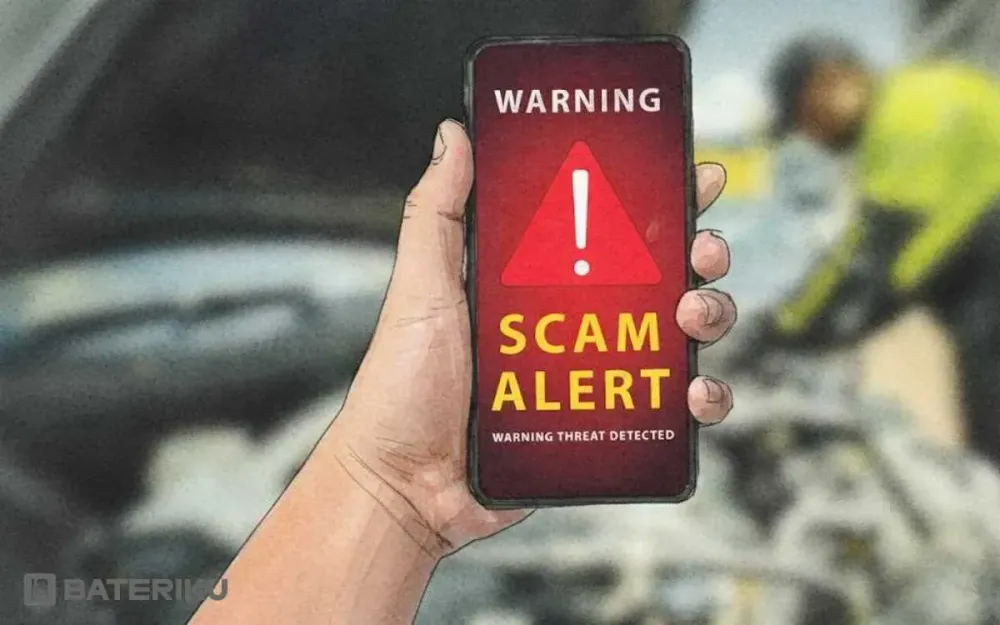
The Jabatan Siasatan Jenayah Komersial (JSJK PDRM) reported that phone scam cases increased in January 2026 compared to the previous year. During that period alone, total recorded losses reached RM27 million across 481 cases. This represents a 46% increase in the number of cases and a 58% rise in financial losses.

Source: Jabatan Siasatan Jenayah Komersial
This growing trend is alarming. Bateriku has also detected several scam attempts targeting customers through phone and messaging platforms. While we continue strengthening our internal SOPs to minimise risks, customers must also reinforce their own protection against such threats.
One common tactic used by scammers is impersonating legitimate service providers and contacting customers directly via messaging apps. These attempts often involve fraudulent payment requests through online banking or QR codes. Scammers typically exploit urgent situations, pressuring victims to complete transactions quickly without proper verification.
5 Tips to Avoid Becoming a Scam Victim
For the safety of Bateriku customers, here are five practical steps you can follow to protect yourself from scams.
1. Only Pay After the Battery Has Been Installed
For cash or e-wallet payments, always complete the transaction only after the battery has been properly installed. If anyone contacts you requesting payment before installation is completed, treat it as a red flag.
2. Verify the Identity of the Person Contacting You
Ensure you know who is contacting you. If you receive a WhatsApp or SMS claiming to represent Bateriku, request proper identification before taking any action. Refer back to Tip 1 if you are asked to transfer money prematurely. In addition to avoiding early payments, never share personal information with unknown individuals.
3. Check the QR Code Before Confirming Payment
QR codes can be manipulated. While they may visually appear official, irresponsible parties can replace them with codes linked to personal accounts. After scanning a QR code and before confirming the transaction, verify that the payment is being made to the correct account. Always double-check the recipient name displayed before finalising the payment.
4. Never Share Banking Information
Phishing involves criminals tricking victims into revealing sensitive information, which is then used to withdraw funds from their accounts. This issue is difficult for banks to reverse because transactions appear to be authorised by the account holder when correct credentials are used. Therefore, under no circumstances should you share sensitive details such as OTPs, PIN numbers, or banking credentials with unknown parties.
5. Report Any Suspicious Activity
Fighting scams is a shared responsibility. Your report of a scam attempt could prevent others from becoming victims.
If you have any doubts:
- Stop communicating with the suspected scammer.
- Contact the company directly through official channels.
- Report the matter to the relevant authorities.
Bateriku Takes Scams Seriously
Scams harm everyone. Customers suffer financial losses, while service providers face reputational damage. Scammers are highly skilled at impersonation, exploiting urgency, and taking advantage of confusion.
Customers are strongly reminded to:
Verify first. Pay later. Use official channels only.
The key is to remain calm and take a moment to assess whether you are dealing with a legitimate representative or a scammer.