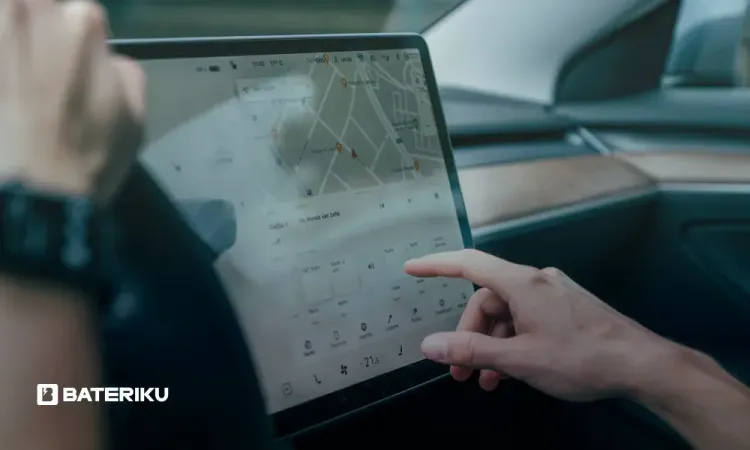
Malaysia is rapidly shifting gears to become Southeast Asia’s central hub for smart and sustainable mobility. Driven by the New Industrial Master Plan 2030 (NIMP 2030) and the National Automotive Policy 2020 (NAP 2020), the nation is pivoting from a traditional producer of goods to a creator of high-value technology and intellectual property.
AI in Malaysia’s Automotive Industry: Predictive Maintenance, ADAS and Autonomous Mobility
At the heart of this transformation is Artificial Intelligence (AI), which is redefining vehicle design, manufacturing, and maintenance across the entire supply chain.
Addressing the Safety Imperative
The push for AI integration is fueled by a critical need for road safety. In 2023, Malaysia recorded over 600,000 road accidents and 6,400 fatalities, with motorcyclists accounting for 65% of these deaths. Since human error is estimated to cause nine out of ten accidents globally, AI-powered solutions such as Advanced Driver Assistance Systems (ADAS) and autonomous navigation are viewed as essential tools to mitigate risks and save lives.
The Rise of Autonomous Mobility and Research Hubs
Malaysia has established robust testing grounds to accelerate the commercialization of autonomous technologies:
- MRANTI Park: This 686-acre "Living Laboratory" features the Autonomous Vehicle Experiential Lab (AVXL), which includes a 12-kilometer live urban test route and a "digital twin" for virtual scenario testing.
- Local Innovation Leaders: Firms like Reka have developed autonomous prototypes, such as a self-driving Perodua Bezza that uses a sensor suite of lidar, radar, and cameras to navigate obstacles in 2013.
- Last-Mile Automation: HelloWorld Robotics, a Malaysian startup, has deployed the TARS delivery robot for indoor and outdoor use, and operates autonomous buggies at MRANTI Park to transport visitors.
 (Credit: MRANTI)
Predictive Maintenance: The Shift to "Condition-Based" Service
A major evolution in the ecosystem is the transition from fixed-schedule maintenance to predictive diagnostics. A key product in this space is ADaPTiV (Advanced Diagnostic and Prognostic Technology for Vehicles), a collaboration between MARii and Petronas.
This system uses AI and IoT to analyze real-time vehicle data, detecting signs of component failure before they occur. Similarly, the Wisedrive AI ecosystem uses computer vision and deep learning to inspect used cars with 99.7% accuracy for odometer tampering and hidden damage.
Bateriku and the Future of AI-Driven Services
As Bateriku moves toward automation and AI-driven services, it aligns directly with these national and global trends. By adopting the principles of predictive thermal management and battery health monitoring, Bateriku can transition from a reactive "breakdown service" to a proactive mobility partner.
International insights from the Volkswagen Group and IBM suggest that AI can boost product value and digital service value by 22% and 37%, respectively, within three years. For Bateriku, this means:
- Automated Diagnostics: Utilizing AI to provide customers with instant, high-accuracy roadside assist services
- Personalized Experience: Using generative AI to create human-like conversational interfaces for roadside assistance (FATIN), ensuring seamless and contextual customer interaction.
Challenges and Global Context On AI in Automotives
Despite the potential, the ecosystem faces hurdles such as cybersecurity risks, ethical decision-making in autonomous systems, and data sovereignty concerns. The Malaysian government is addressing these through the RM2 billion Sovereign AI Cloud to ensure data security while supporting large-scale industrial adoption. Internationally, the automotive industry is shifting toward software-defined vehicles (SDV), where 74% of executives believe AI will power the core of all vehicle functions by 2035.
Malaysia’s automotive ecosystem is no longer just about assembly; it is about intelligence. For industry players like Bateriku, the integration of AI-driven predictive maintenance and automated service delivery is not just an upgrade it is a strategic necessity to remain competitive in a landscape where software increasingly defines brand value. By leveraging national infrastructure like MRANTI and aligning with NIMP 2030 missions, Bateriku is well-positioned to lead the next generation of smart automotive services in the region.